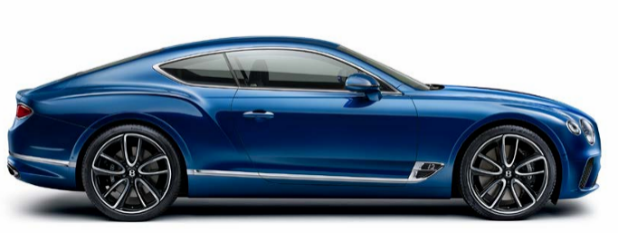
Bentley Continental GT Computational Fluid Dynamics (CFD) project:

The Project:

  • Computational Fluid Dynamics (CFD) Simulation simulates fluid flow over a given body to analyse the drag forces that are developed and the distributions of pressure variation and fluid velocity around this given body.


  • The goal of this project was to create a rear diffuser for a Bentley Continental GT, a notorious luxury car with a relatively low fuel economy. The idea was to create a diffuser to increase its mileage per gallon (MPG) by intending to reduce the drag forces acting over the Bentley body.


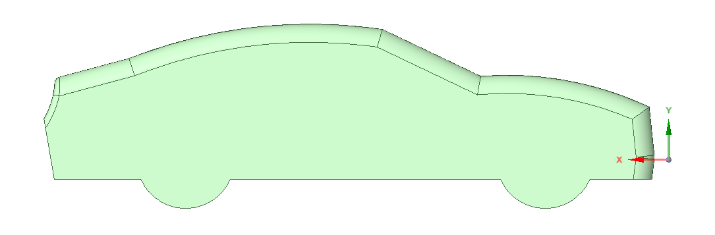
  • A 3D model was generated using Ansys SpaceClaim and simplified to create a mesh geometry. This mesh would allow for a CFD analysis to be performed on the surface of the Bentley

The structural mesh and diffuser design:

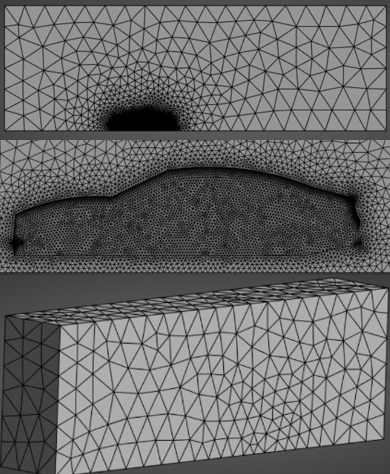
  • For the Ansys CFD software to calculate the fluid velocity and pressure distributions along the entire surface of the Bentley, a total of almost 500,000 tetrahedral mesh shapes needed to be generated along its surface as well as withing a suitable domain as shown by the rectangular box.


  • Various calculations considering the viscosity, air density and fluid velocity are completed in each of these shaped elements through what are known as the Navier-Stokes equations, allowing for a drag force acting on the car to be calculated.
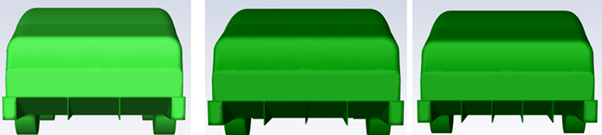
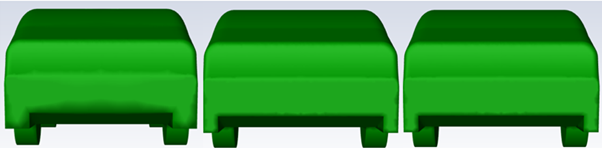
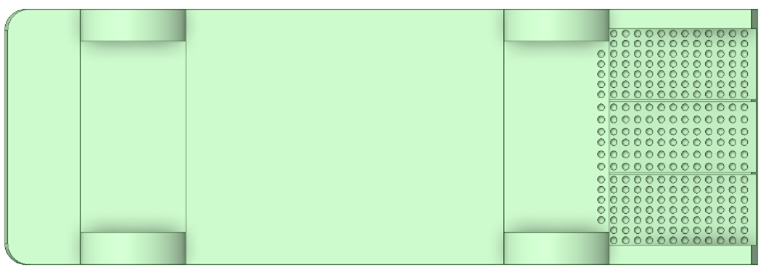
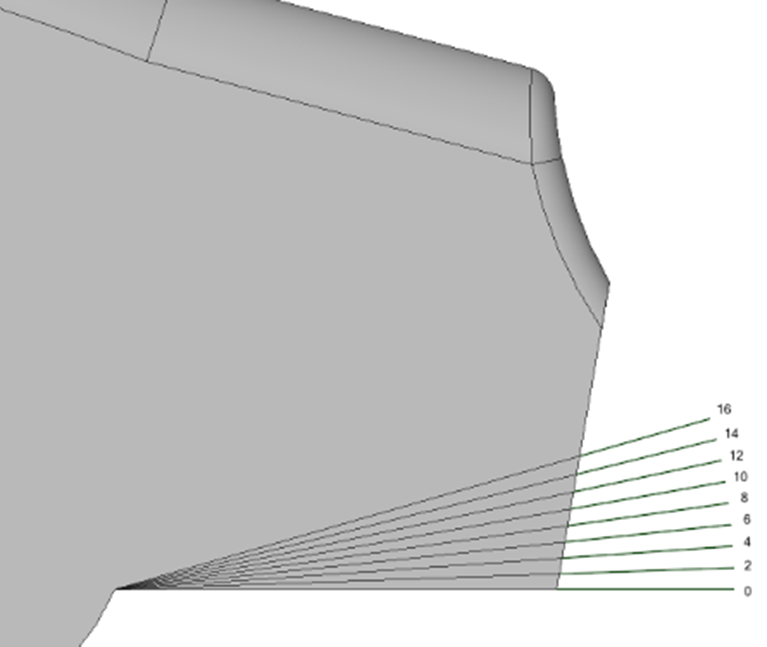
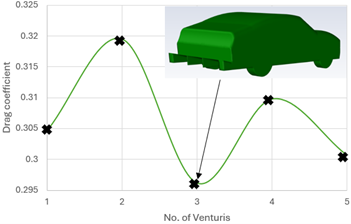
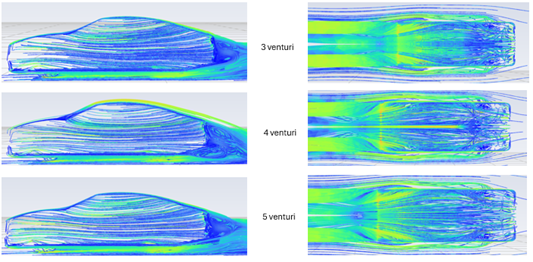
  • Given this project aimed to acquire an optimal diffuser design that would offer the lowest drag coefficient over the car, varying parameters of the rear diffuser were changed and tested, including the length, angle, width and number of venturi tunnels. Testing of new ideas such as dimpling were also investigated as seen below.
Venturi tunnels
diffuser width
simulation of varying dimple designs on the underbody
diffuser angle

The Project Final Result:

  • The CFD analysis yielded a drag coefficient of 0.2962, significantly lower than if the Bentley had no diffuser. In fact drag reduction had reduced by 15.6% demonstrating the major impact that diffusers have on fuel efficiency while providing improved performance to a car.
  • Further investigations looked at dimpling of the rear diffuser using the same principles that golf balls and dolphin skin has to reduce turbulent wakes during motion and reduce drag forces.
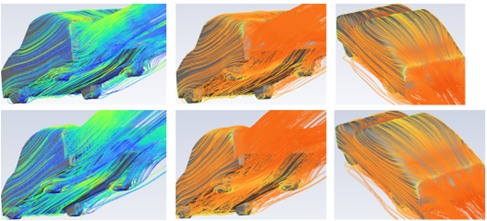
  • Some of the results from this project can be seen below with the flow fields being generated around the Bentley model. With darker blue regions indicating a slower fluid velocity around the car, it is most noticeable that the diffuser generates turbulent flow at the rear of the car as shown by the dark blue swirl patterns where the air is significantly slower.


  • The orange flow patterns signal pressure variation around the car and it is clear to see that there is higher pressure air flow at the rear as indicated by the darker orange regions, a noticeable pattern when simulating all of the diffuser parameter variations.


  • The project demonstrated an exciting venture into CFD and allowed me to understand how CFD works and the key processes and considerations of performing a simulation. 

Contact Me Anytime

Although I’m busy with current projects, my inbox is always open. Whether you have a question or just want to say hi, get in touch and I’ll try my best to get back to you!